Sectors / Industrial Goods & Machinery
Industrial Goods & Machinery Logistics
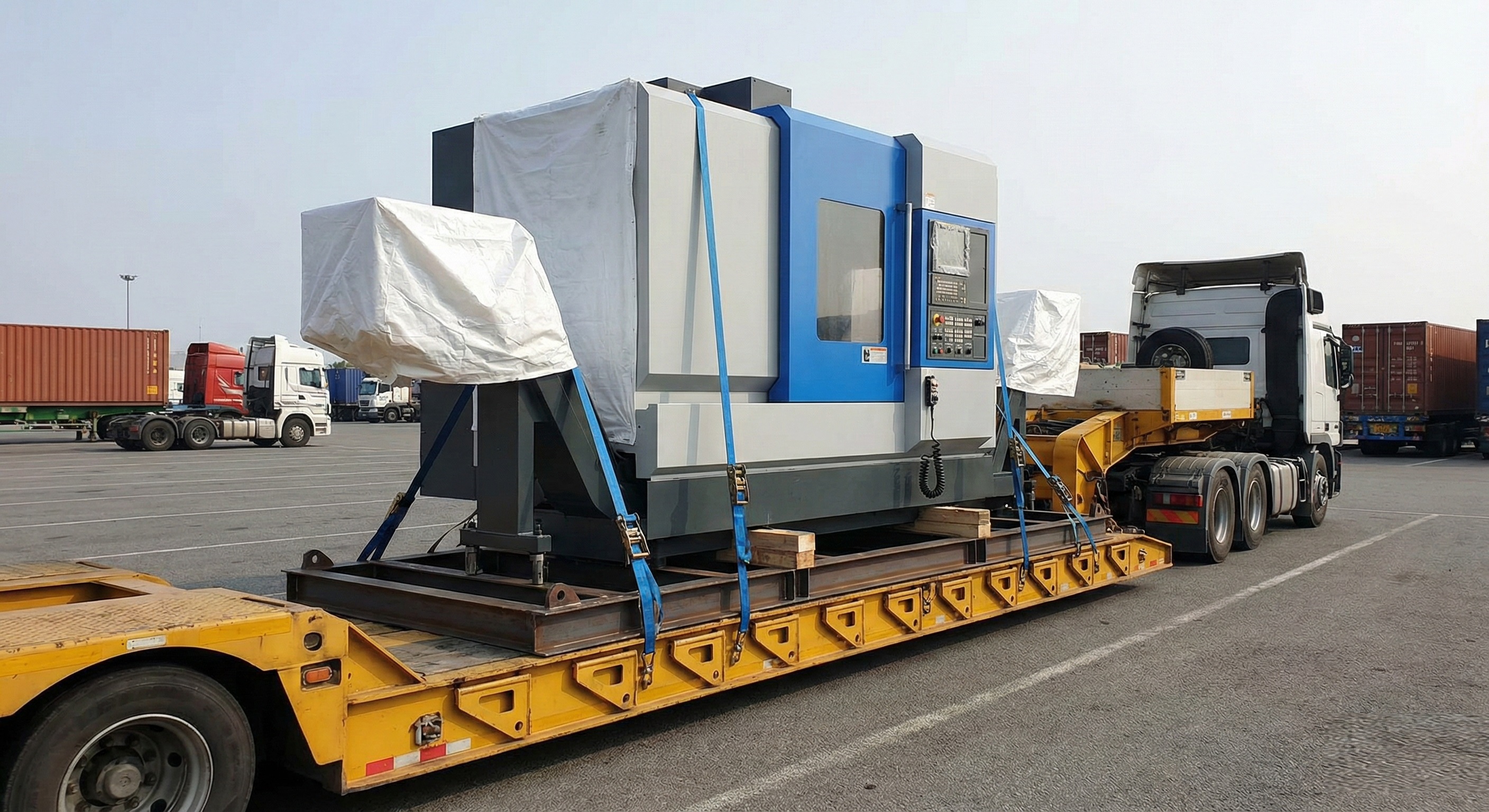
Industrial goods and machinery represent far more than a shipment. Each piece of equipment directly affects the commissioning of a production line, the timely start-up of a facility, or the planned sequence of a project. For this reason, even a minor delay in industrial logistics can affect not only transportation, but also installation order, site organization, and the operational timetable. In these cargoes, the real issue is not speed. The real issue is being able to foresee where the process may be strained and move forward without creating deviation. As important as dimensions and weight are route restrictions, transit permits, site access, securing arrangements, and delivery windows. If one of these elements is missing, the operation is not truly complete even if the cargo has arrived.
ARAN Logistic approaches industrial logistics not as “cargo movement,” but as the on-site continuation of the project plan. We organize shipments not only according to transport timing, but also according to the project rhythm and delivery sequence. The goal is not to accelerate the process, but to create a controlled, predictable, and deviation-free flow.
Below, you can clearly review the core logic of industrial logistics, the factors that make the process difficult, and the most common operational flows encountered on site.
Cargo Analysis
Dimensions, weight, balance, and sensitivity.
Route Planning
Bridge/tunnel limits and site access.
Load Security
Securing, balance, and vibration control.
Permits & Documents
Out-of-gauge transit, customs, and compliance documents.
Risk Management
Control points, coverage, and backup planning.
Operational Clarity
Deviations are seen early, response is not delayed.
What Is Industrial Logistics?
Industrial logistics covers the technical assessment of production, assembly, and process equipment before transport, and delivering it to the site with the vehicle and equipment best suited to that analysis. Success here means not only arrival, but delivery in a condition ready for installation within the planned time window.
Due to non-standard dimensions, heavy weight, and site restrictions, the process often stops being just a “transport job”; it becomes a natural part of project coordination. That is why route, load security, and delivery windows must be clarified before departure.
ARAN Logistic manages industrial cargo in international road transport with planning discipline; keeping the flow under control without making it unnecessarily complex.

Factors That Make Industrial Transport Difficult
In industrial projects, a delay does not remain a single shipment issue. The late arrival of one component can affect crane planning, site safety procedures, assembly order, and production line installation. That is why it is essential to identify in advance where the plan may begin to strain.
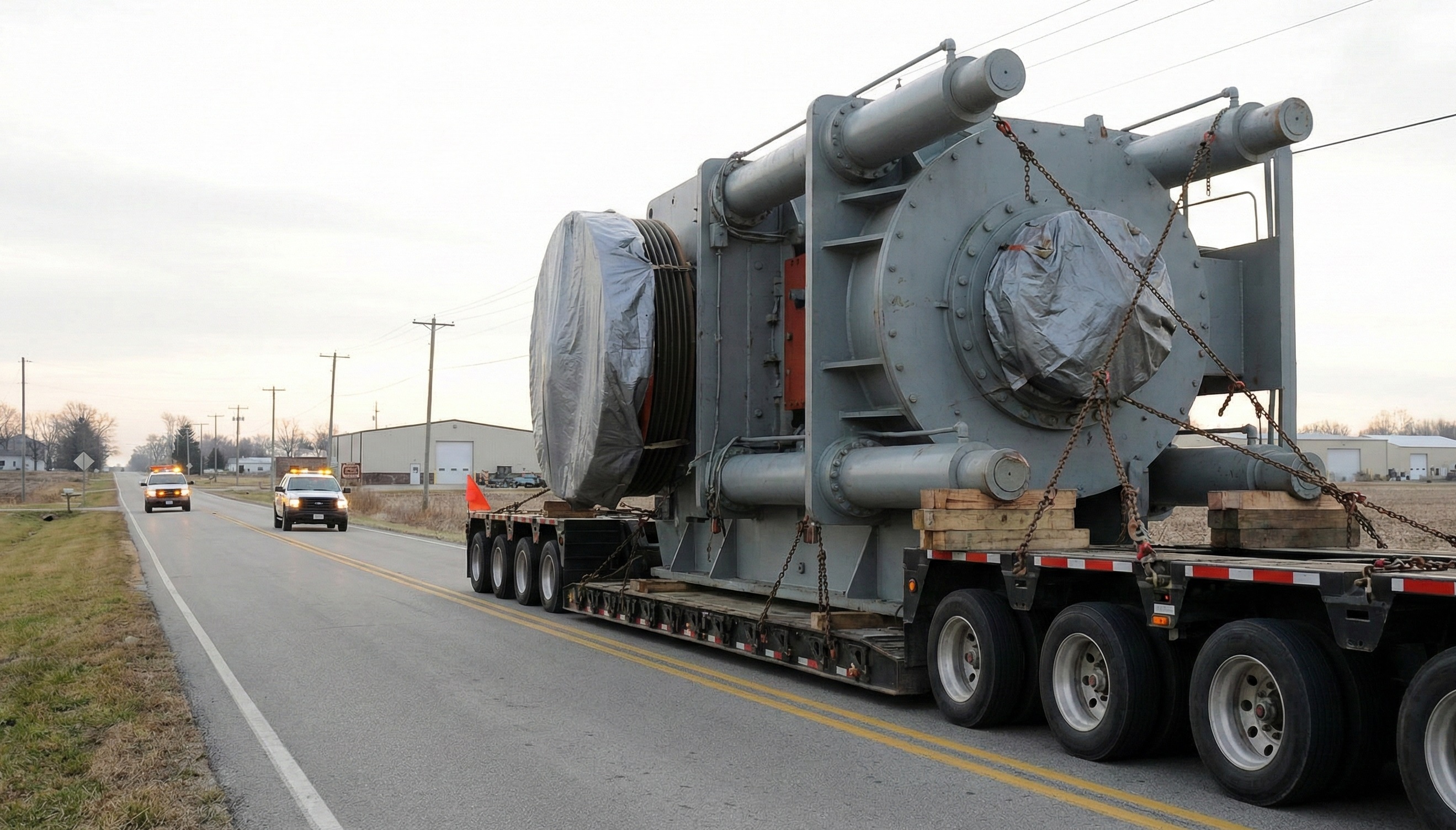
The first factor that complicates the process is route restrictions. Bridge load capacities, tunnel heights, narrow crossings, and city transit permits often require site and route preparation. In out-of-gauge cargoes, transit procedures and timing directly shape the schedule.
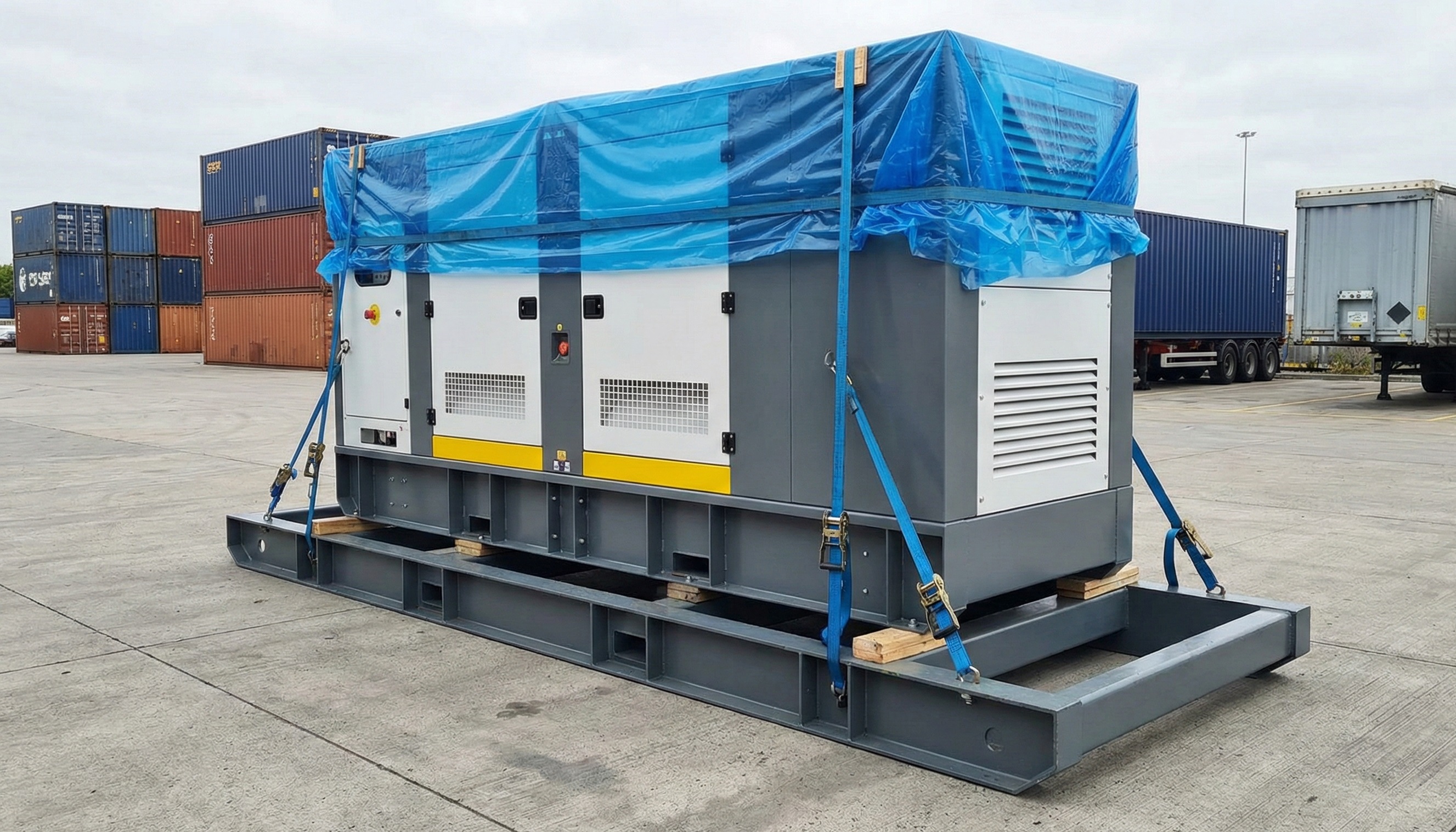
The second area is load security. Balance points, securing requirements, and vibration-sensitive parts determine the tolerance for damage, especially in sensitive equipment. The third area is site delivery: if the crane schedule, ground preparation, maneuvering area, and delivery window are not aligned, “arrival” does not mean delivery.
The right approach is not to force the process to move faster, but to move forward without creating deviations. In industrial logistics, the operation that progresses calmly is often the one that has been planned most accurately.
Operational Flows in Industrial Projects
Success in industrial logistics is measured not by workload, but by the process moving in the right sequence. When site preparation, load security, and delivery windows are aligned, the operation flows almost invisibly.
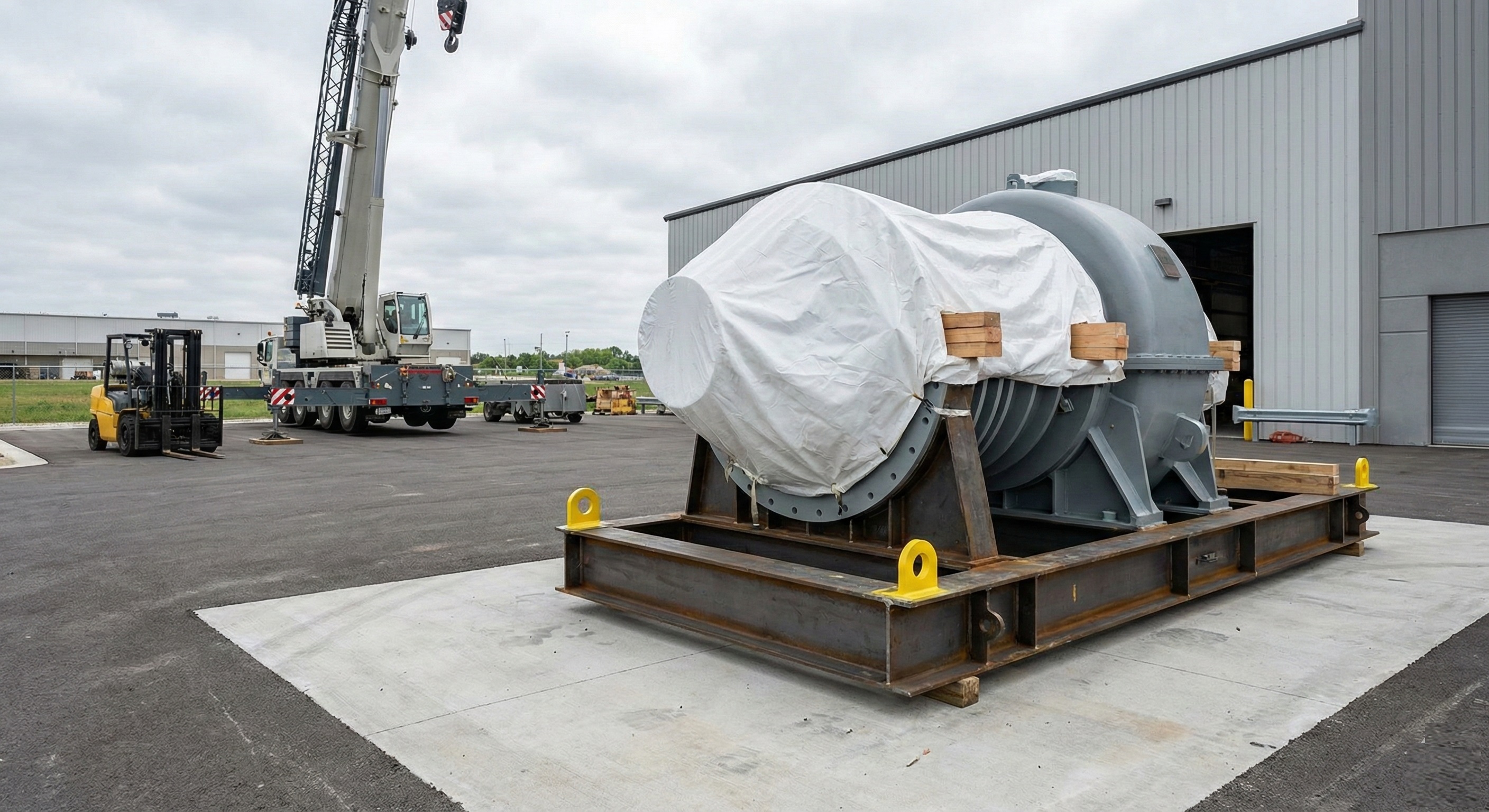
Project Equipment Shipments
Industrial equipment is often not a single “cargo item,” but a specific sequence within a production line or site installation. If shipments are made in the wrong order, it creates waiting time, repositioning, and time loss on site. If the unloading plan is not aligned with the crane schedule, even equipment that arrives on time can still slow the process.
ARAN Logistic structures shipments according to the project rhythm and focuses on delivering critical items to the site with predictable timing.
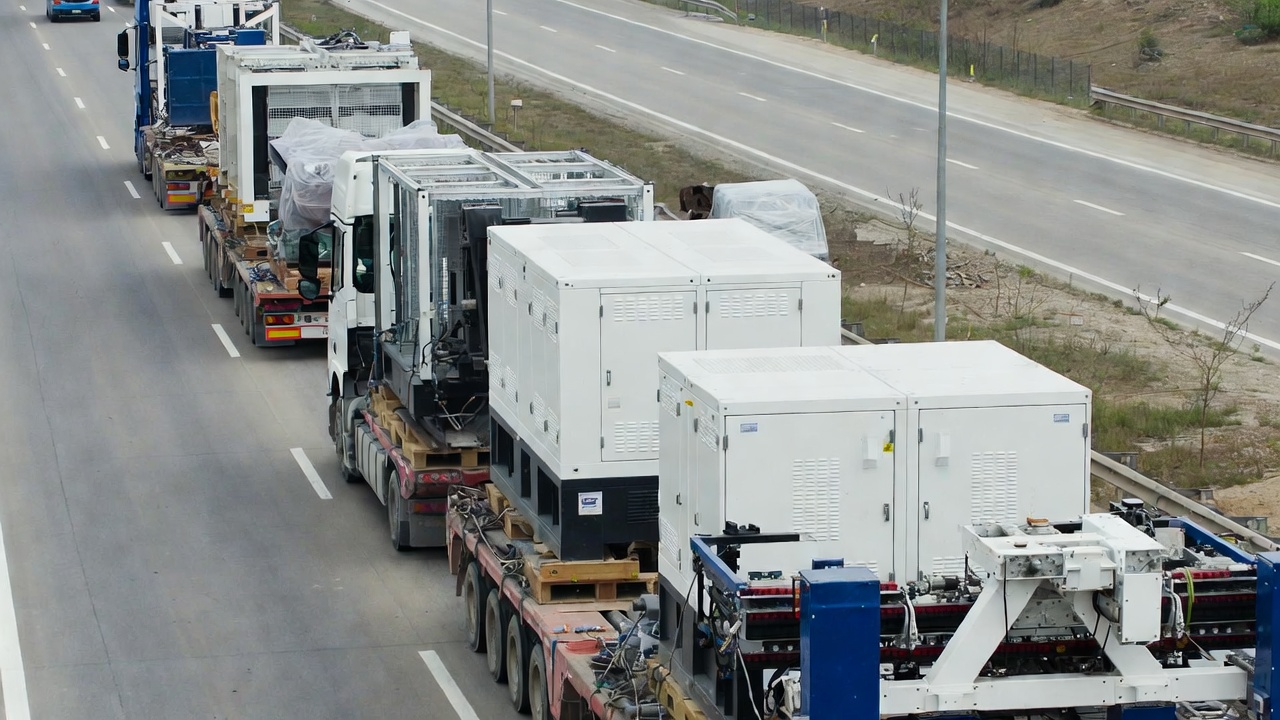
Cross-Border Transport and Transit Planning
In international industrial transport, planning is not only about choosing a route. If customs procedures, project-specific documentation, out-of-gauge permits, and transit timing are not properly set, the flow slows down. Especially in production line installations, even small delays at border crossings can expand into larger scheduling issues.
ARAN Logistic links transit planning to the delivery schedule, aiming to reduce unexpected stoppages and keep the flow stable.
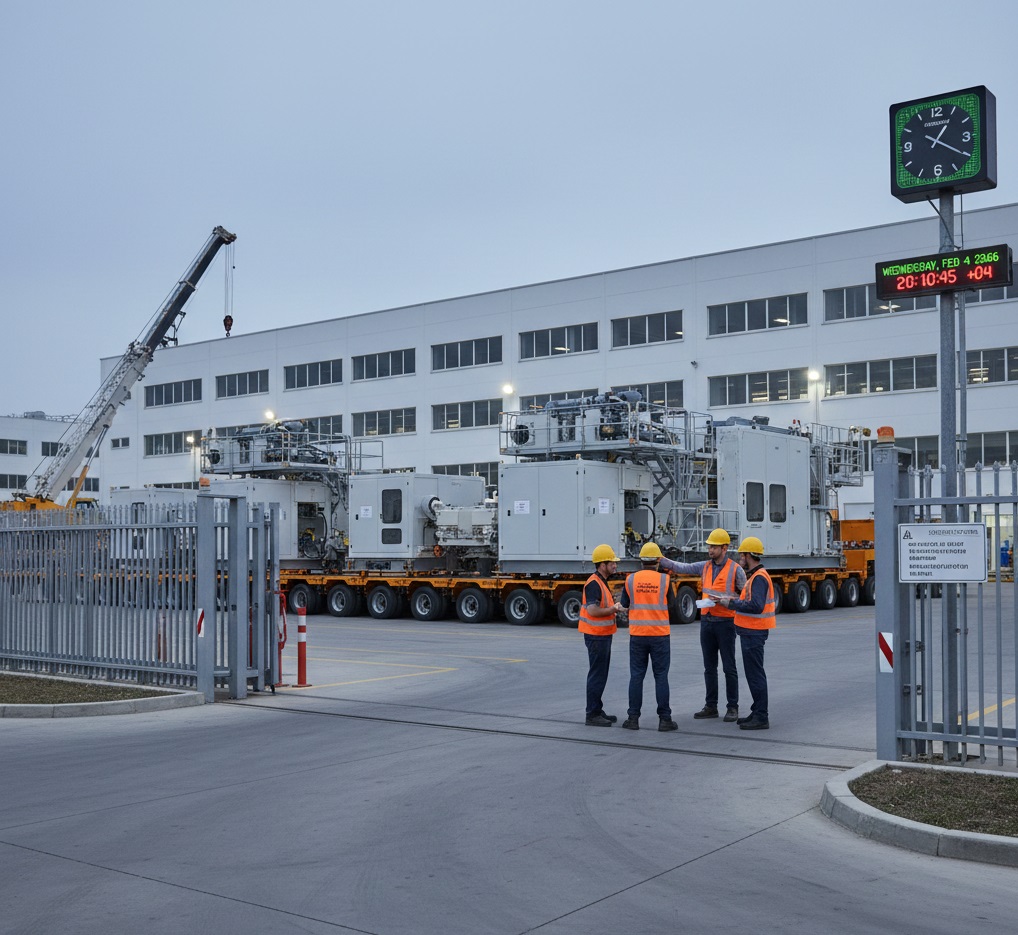
Project Schedule and Delivery Windows
Delivery windows at industrial sites are limited. Shift schedules, crane availability, ground preparation, and internal site safety procedures define delivery timing. For that reason, “setting out” alone is not enough; the delivery must take place in the right time slot and in the correct sequence.
ARAN Logistic plans delivery timing to match the project rhythm and aims to manage site deliveries in a controlled and predictable order.
Control and Operational Visibility
In industrial operations, disruptions usually do not appear as one single “major error.” A few hours of deviation, a delayed approval from the site, or a small uncertainty during loading can quickly affect the schedule. The issue is often not the “event” itself, but how events trigger one another.
That is why the critical point is not to track everything, but to identify in time where the process is beginning to strain. Operational visibility reveals early where the plan is breaking down and makes intervention simpler.
When the flow is clear, logistics stops being an exhausting area of uncertainty for the project. It becomes a system that supports the site rhythm and works almost invisibly. ARAN Logistic treats visibility not as a reporting burden, but as a practical control tool that speeds up decision-making.
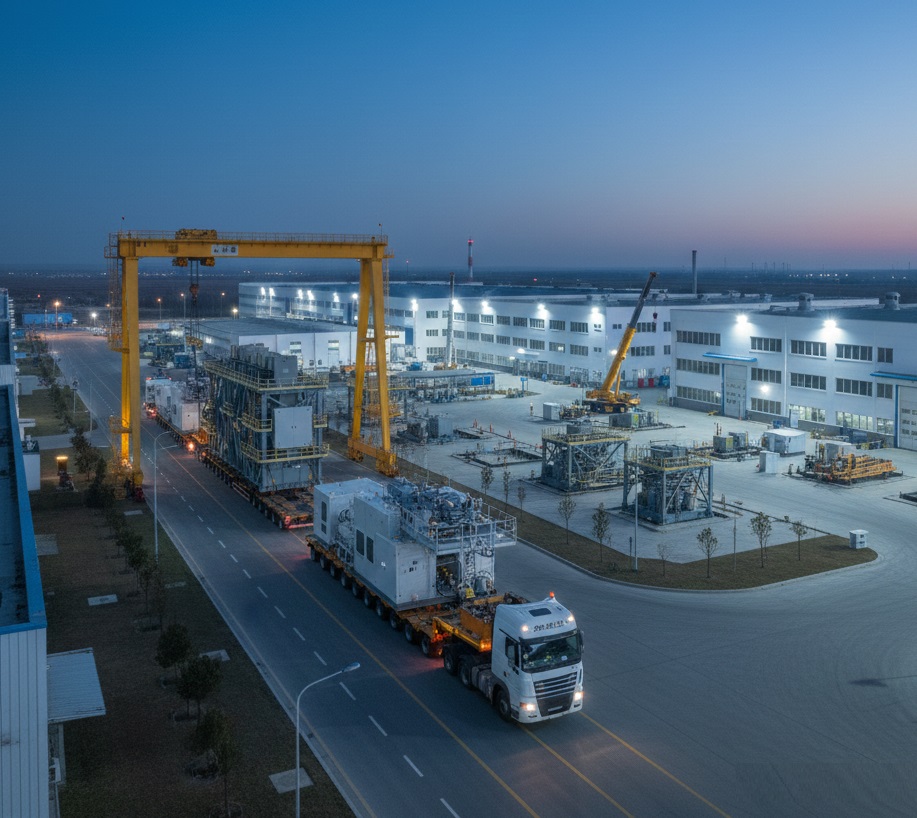
Let’s Define the Right Transport
Plan for Your Operation
Let’s build the flow together based on dimensions/weight, route limits, permit-document compliance, and delivery windows. Once the plan is clear, industrial logistics does not necessarily move faster — it moves without deviation.